Print banner
Search
Print Normal text size Larger text size Largest text size
PrintText Size

The House

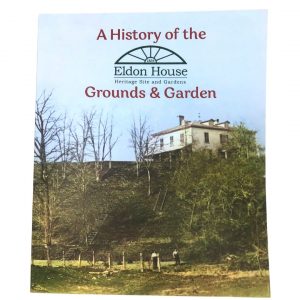
By the standards of the day, the house John and Amelia Harris moved into with their eight children was a veritable mansion. It was set on a piece of high ground overlooking the forks of the Thames, near the District court house, which still stands today. Within a few years, terraces were created down the side of the bank to provide a picturesque view and a pleasant walk to the river.

In its early years the house was known as Eldon Terrace. At the north end of the property was a mill race, a deep ditch filled with water that ran along the base of the hill from the nearby Blackfriars Mill. A small dock was built here at the turn of the century, from which boats were taken onto the river.

Two more children were born at Eldon House, bringing the number to seven girls and three boys. Some of the girls were reaching maturity soon after a garrison of British soldiers was established in London. By 1851, four of the girls had married officers and left home. Following her husband’s death in 1850, Amelia continued to live in the house. Their eldest son, John Fitzjohn, married in 1859 and intended to live at Eldon House. However, he succumbed to a lingering illness two years later. His brother Edward and Edward’s wife, Sophia, remained at Eldon House with Mrs. Harris.

In the late 1870s, after Edward and Sophia had been in residence for several years, they decided to build a large addition, including a a formal drawing room, a new kitchen and more space for the servants. Eldon House generally had five servants: a cook, two housemaids, one parlourmaid and a gardener. Edward also installed steam heating in the 1880s. Deepening financial problems nearly cost Edward his house in the late 1880s. His brother George was forced to sell his own house and moved with his family, including his wife Lucy into Eldon House in order to help Edward with his debts.

Several years after George and Lucy took sole possession of the house, Lucy received a large inheritance from her grandmother in England. Over the next decade they were able to make a number of improvements to the property and grounds, including rebuilding the terraces and converting the lighting from gas to electricity in 1896.

Architecturally, Eldon House was influenced by the Georgian and Regency styles of the early 19th century. Structurally, it is a sheathed frame (hewn timber) shelter on a brick foundation. The hall forms the central axis of a formal and symmetrical plan: the library and morning room are on one side, the dining room and back hall on the other.


     photo by Tommy Wilson
     Eldon House