The Gardens

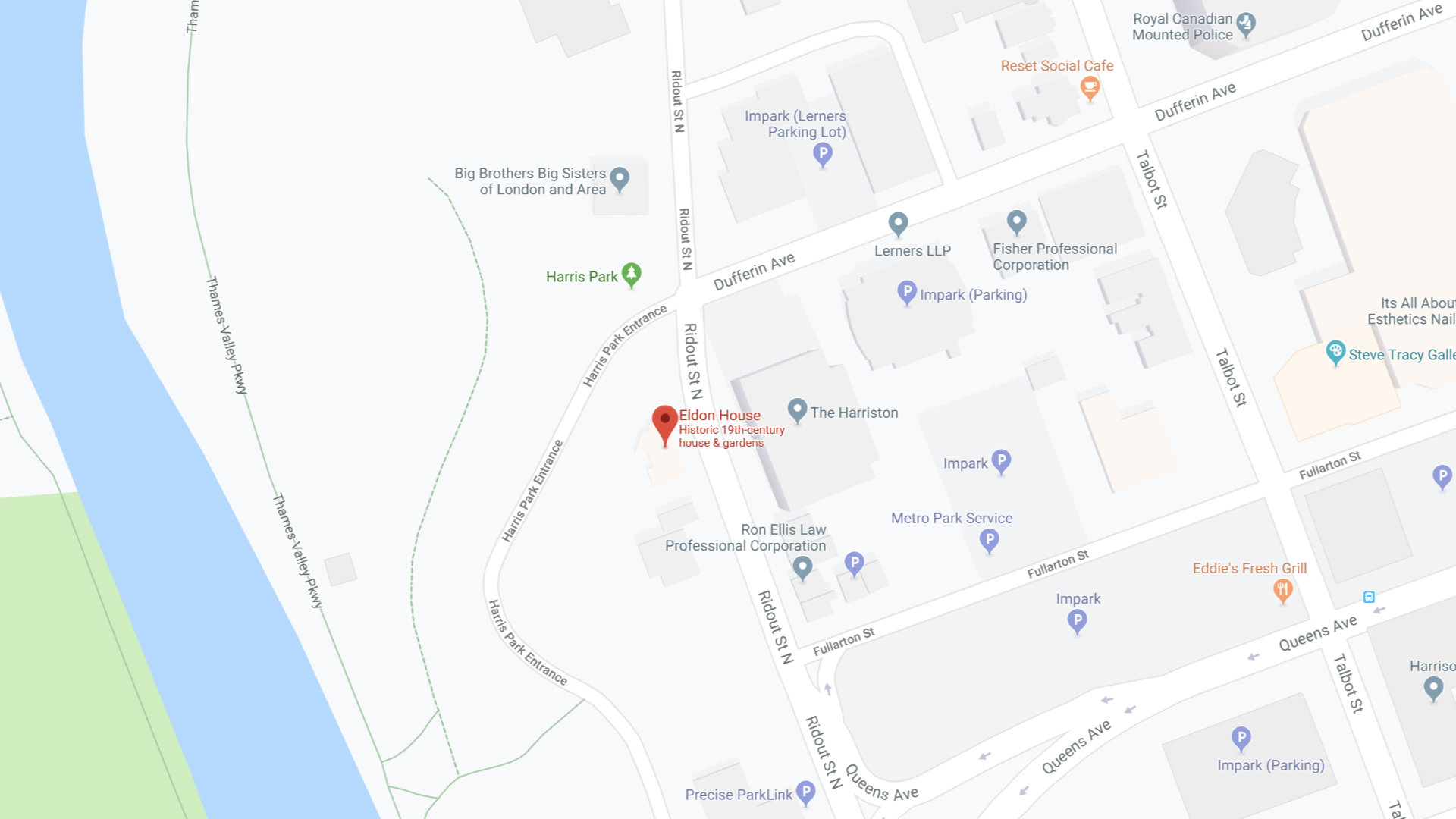
The Harris property originally consisted of 11 acres and a terraced walk
spanned the two elevations of the site – from the house down to the flood plain.
The property initially spanned along the Thames from Fullarton Street north to
Central Avenue (then known as Great Market Street).
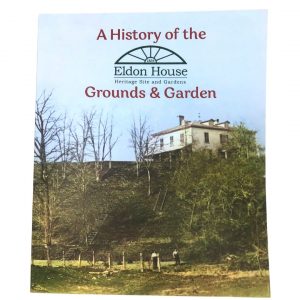
The property surrounding Eldon House on top of the hill now overlooking “Harris
Park,” has had garden beds since the 1840s. On the “flats” by the river, large
vegetable gardens were planted – at their height, they covered more than six
acres of land and needed five fulltime gardeners to tend them.
The historic garden urns and benches you will find on the grounds have been
onsite since the 1890s, after an inheritance came to Lucy Ronalds Harris from
her grandparents. At that time, the family finances improved, allowing for the
hire of a fulltime gardener. The family also added a conservatory to the drawing
room as well as built the greenhouse that still exists today.
A decision was made in the early 1980s to restore the gardens to a similar state
to when the Harris family was in tenure. The focus became the gardens of the
1890s and 1920s. Experts from the University of Western Ontario and the
University of Guelph helped to authentically re-create the gardens, using family
photos, historical seed catalogues, magazines and articles.
Plant Identification
The following plant-identification and location listing follows a route from
the front gates off Ridout Street, south along the gravel walk, past the
herbaceous border. It follows the terrace edge to the west lawns and north to
the rockery. Finally, we move past the greenhouse and into the courtyard, where
a path leads south along Ridout Street back to the entrance gate.
The plants identified are intend to act as a “taste” of the perennials that have
been traditionally featured on the site and is not an exhaustive listing.
Front lawn (South of Eldon House)
To the south of the house, a long herbaceous border is flanked by climbing rose
vines and peony bushes representing the late 1800s period. In the herbaceous
border you can find: Alyssum, Baby’s breath, Begonias, Bleeding heart,
Columbine, Chrysanthemum, Daffodil, Dahlia, Fern (ostrich), Feverfew, Foxglove,
Heliotrope, Hollyhocks, Hosta, Hyacinth, Iris, Johnny-Jump, UpLily (plantain),
Peony, Petunia, Phlox, Poppy, Rudbeckia, Salvia, Star flower, Sweet William,
Thyme, Tulips and Yarrow. On the east fence adjacent to the herbaceous border
are climbing roses that were planted in 2002, Grape hyacinth, Lavender, Sweet
pea, and Peony which was moved from the North Rose garden when the Eldon House
Interpretive Centre was built in 2000.
South Garden
This location was historically where the cutting garden was located. It spanned
from the edge of the gravel walk to the south fence. Today, you'll find Bleeding
heart, Day-Lily, Hellebore, Pink chrysanthemum, Poppy and Sweet pea. The Iris
that is planted there was given to the house's last owner Lucy Little from Beryl
Ivey, a noted London philanthropist.
Terraced Walk to Floodplain
Though the terraces have eroded, this was once the route the Harris's would take
to their lower property now known as Harris Park. The terraces have existed
since the 1840s and were reportedly a source of pride to John Harris. By the
white urns at the curve of the cliff edge was the entrance to the manicured
walk. Currently existing on the terraces: Anemone, Tulips, Daffodil, Tiger lily,
as well as Redbud, Lilac, Sugar Maple and Norway Maple trees.
West Lawn
Once known as the croquet lawn, this sheltered area of the grounds was the site
for many garden parties. Today it features a central Magnolia tree. At the
northwest corner of the lawn sits a vine-clad structure in the foot print of a
summer house which had historically overlooked the flats.
Rock Garden
To the west of the greenhouse is the rock garden originally constructed in the
1920s. Central to this garden is a lily pond with goldfish and an antique
fountain. The fountain is based on an Italian Renaissance sculpture by
Verrocchio called Boy and a Dolphin. Included in the garden: Asiatic lilies,
Candytuft, Catmint, Choral bells, Day lilies, Dianthus, Loyalist rosebush, Phlox
and Sage. To the north of the rock garden is an historical Rose arbour, once
leading to a Rose garden. This garden no longer exists, as it was dismantled
before building the Interpretive Centre.
Courtyard adjacent to Interpretive Centre
The grey wooden fence along this section of the property is reminiscent of the
streetscape when the Harris family was in residence. This area was bustling with
activity – a set of dog kennels, a carriage house, greenhouse and garden storage
as well as tradesman deliveries all centred on the courtyard.
East Fence to Front Gate
There once existed a kitchen garden on the east side of the house planted with
the requisite Mint, Chives, Sage, Thyme Basil, Parsley and Dill. Medicinal
plants were also planted here, including Southernwood, Lavender and Feverfew.
Today, you will find Hosta, Peony, Holly and Lovage. Past the green picket fence
to the Magnolia tree is a border of Lilac bushes, Bergenia, Tree peonies,
Hydrangea, Bleeding hearts, Phlox, Iris, Lilly of the Valley and Chrysanthemum.
The trees along Ridout Street from the courtyard to the entrance gate are London
Plane, Hackberry and Sycamore.